FREE TEMPLATE

A free plot hole checklist for revising your novel

A printable checklist for the logic pass of a revision, after the draft is finished and before you polish sentences. Seven groups of checks, from time and chronology to setups and payoffs, with space to note the chapter of each problem, and a log page for tracking fixes. Print it, or keep it open beside the draft.

Download the PDFStart it in Loomworld instead

PDF · A4 · 3 pages · free to use and adapt

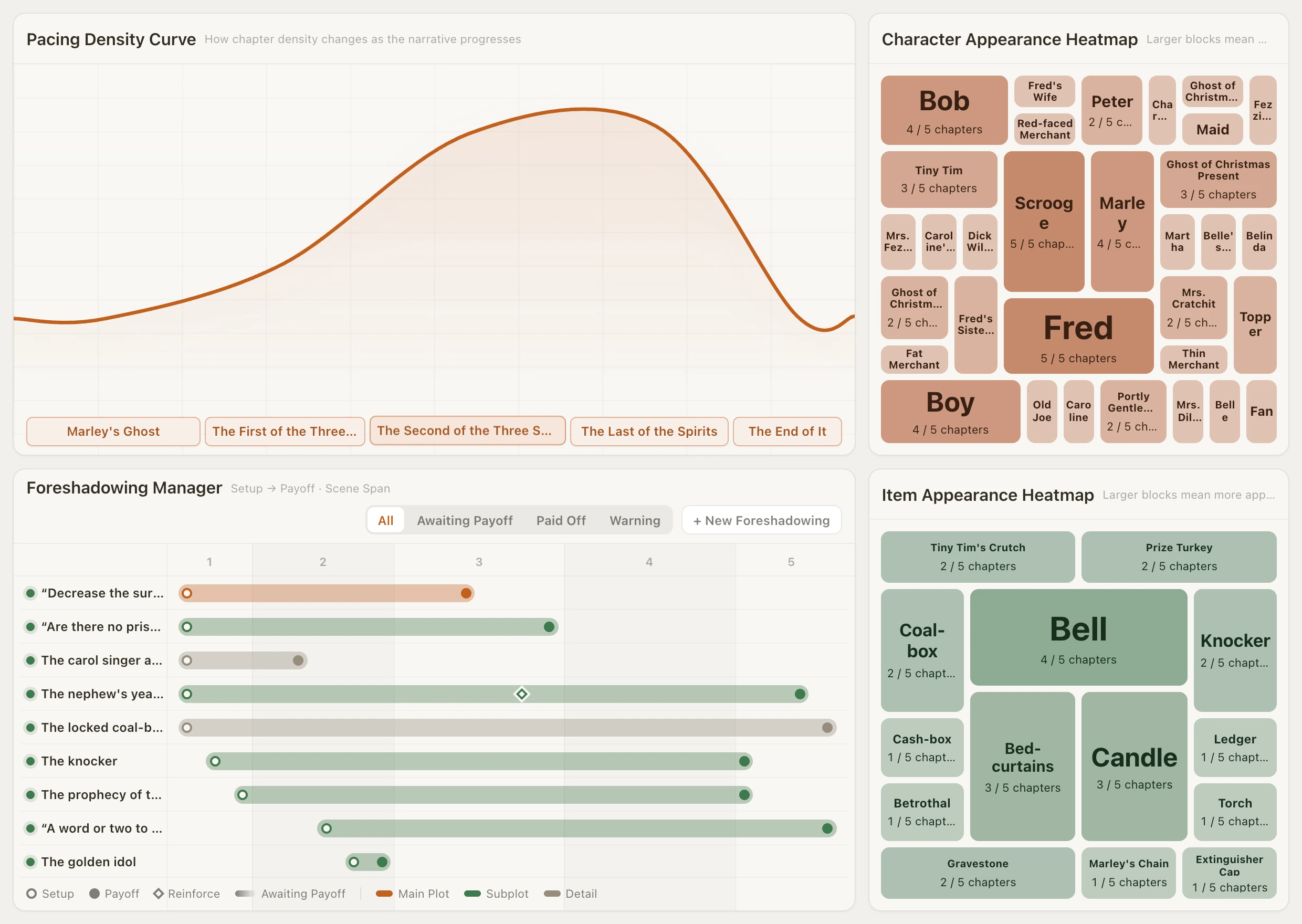
Loomworld Beats page: pacing density curve, character and item appearance heatmaps, and the Foreshadowing Manager showing setup-to-payoff spans across five chapters

Why plot holes survive revision

01

You know the story too well

Readers notice the dagger lost in chapter 12 and found in chapter 30. Writers, who know what was meant, read straight past it.

02

Style passes miss continuity

When you read for voice and pace, dates, injuries and who-knows-what are easy to miss. They are easier to catch with one question in mind at a time.

03

Long books outgrow memory

By chapter one hundred, few writers still remember every date, promise and change of allegiance from the first ten.

What is in the checklist

Seven groups of checks

Each group asks one kind of question, so you can check with one thing in mind at a time. Every check has room for the chapter where it fails. One example from each group:

  • Time: can characters get from A to B in the time the story allows?
  • Knowledge: does anyone act on information they have not learned yet?
  • Objects: is every important object where it was last left, in the right hands?
  • Rules: if a power could solve this problem, does the story show why it is not used?
  • Motivation: does each major choice fit what the character wants and knows?
  • Setups: is every planted clue paid off, or dropped on purpose?
  • Cause and effect: is any key problem solved by a coincidence the story has not set up?
A log for what you find

The last page is a log with four columns: the chapter, what doesn't add up, the chapter where the fact was first set, and the fix. Noting where a fact was first set lets you compare both places before deciding which one to change.

Keep the facts where you write

Many plot holes are facts that changed without anyone noticing: a character's age or faction, who holds a prop, when an event happened. In Loomworld you record those as you write: a character's change from a given chapter, who holds a prop from which chapter, and dated events on the timeline. When you run the checklist, the record is already there.

Story bible software

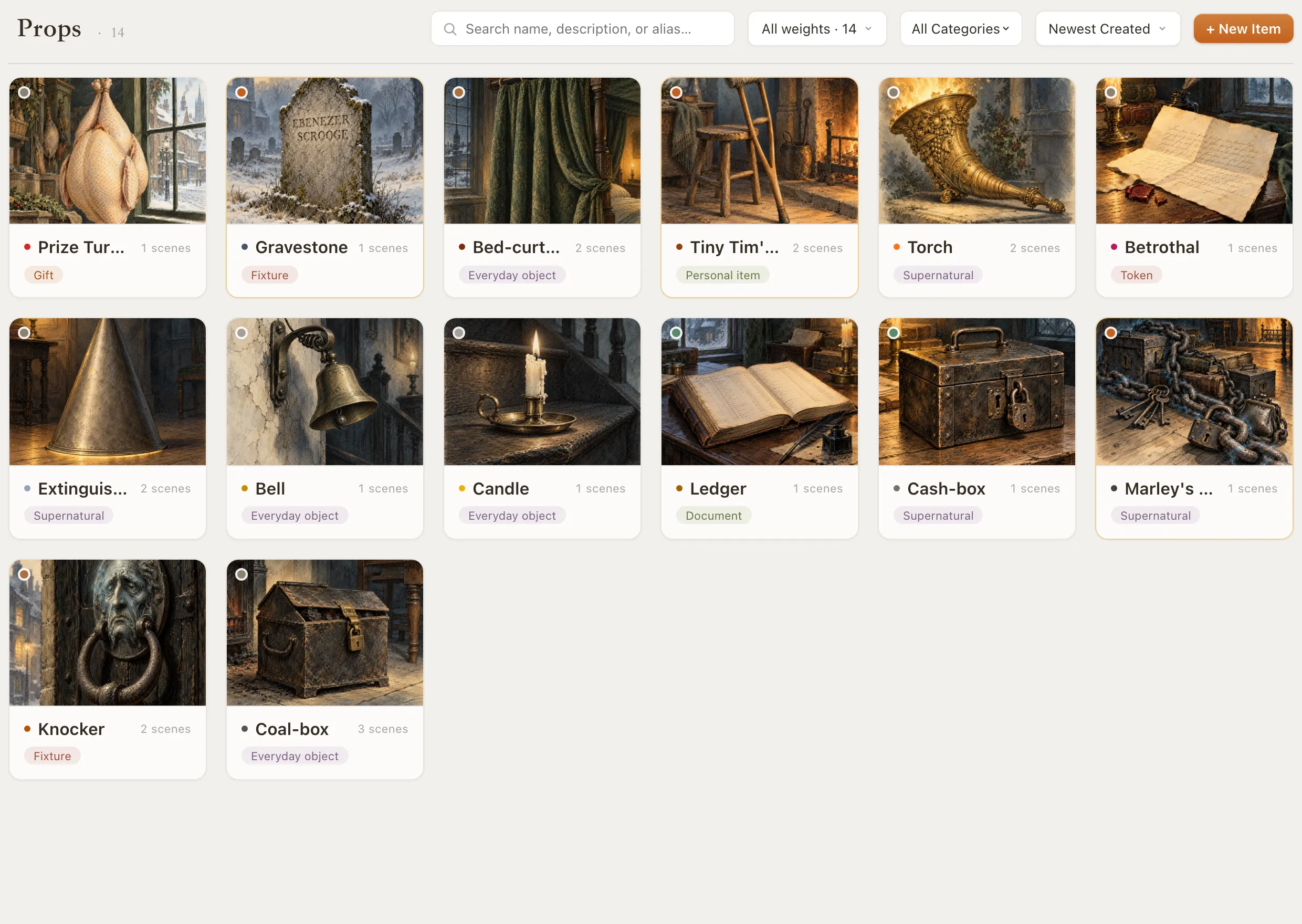
Loomworld props module: cards for the knocker, the coal-box, Marley's chain and other objects from A Christmas Carol

A second reader for the logic

With a paid plan and cloud sync, Loomworld's continuity check compares each chapter with the facts you have recorded and lists conflicts and doubts, each naming the scene and the fact it clashes with. It reports hard contradictions only and never changes your text.

For the softer questions, ask Quill to look for plot holes: weak motives, gaps in cause and effect, characters who know too much, setups never paid off, convenient coincidences. It sorts what it finds into clear holes, possible risks and things not yet explained, and deliberate gaps do not count. Talking it through changes nothing in your project; you decide what to fix.

Novel continuity checker

Setups you can see across chapters

The Foreshadowing Manager draws each setup, reminder and payoff as a span across your chapters and warns when a thread has gone unresolved for too long. You mark each setup yourself; it does not find them for you.

Foreshadowing tracker

How to use it

  1. 1

    Finish the draft first

    The checklist is built for a complete draft, before line editing. You can try a group on a single chapter, but checks across chapters need the whole book.

  2. 2

    One group at a time

    Check with one group in mind. A full read per group is the most thorough; in a long book, use your chapter notes to jump to the places that matter. Tick a check when the whole book passes, and write the chapter number when it does not.

  3. 3

    Log, then fix the cause

    Note each problem on the log page with the chapter where the fact was first set, then decide which to change: the earlier set-up or the later scene.

Keeping the record by hand or in Loomworld

The checklist works on paper or with any editor. What changes is where the facts it asks about are kept.

CapabilityIn LoomworldBy hand
Dates and order of eventsTimeline with story timeYour own notes
Who holds what, by chapterHolder changes you record by chapterYour own notes
A character's age, faction or state, by chapterChanges you record by chapterYour own notes
Hard contradictions between chaptersContinuity check (paid plan, cloud sync)Rereading and cross-checking notes
Unresolved setupsForeshadowing ManagerYour own list
Motivation and logicQuill can flag issues; you decideYou judge

Tools can flag possible problems; you decide whether a choice works in your story. The checklist works the same either way.

Frequently asked questions

What counts as a plot hole?

A gap or contradiction in the story's logic: an event that could not happen given what came before, or a character who knows or does something they could not. Unresolved setups are a related problem, so the checklist covers them too. An open question is not a plot hole as long as it fits the facts the story has established.

When should I use a plot hole checklist?

After a full draft and before line editing. If you are serialising, run the time, knowledge and objects groups every few chapters and the full list at the end of each arc.

Can software find every plot hole?

No. Loomworld's continuity check reports hard contradictions against the facts you have recorded, such as a prop in the wrong hands, and Quill can point out weak motives or convenient coincidences when you ask. Whether a choice works in your story is still your call.

Does the checklist work for screenplays and series?

Yes. The checks are about story logic, not format. For a series, gather the facts and open threads from earlier books yourself and run the knowledge, objects and setups groups across books as well as within each one.

Is the checklist free?

Yes. Download the PDF, print it, and adapt it for your own books.

Check one chapter tonight

Download the checklist and run the time and objects groups on your latest chapter. Or start a free project and keep those facts in Loomworld as you write.