FREE TEMPLATE

A free series bible template for novelists

Everything a series has to keep straight across books, in one file: characters and how they change, places, objects, world rules, two timelines, open threads and a continuity log. It is plain Markdown, so it opens in any text editor, Notion or Obsidian. Or start it in Loomworld, where each section is a module linked to your manuscript.

Download the templateStart it in Loomworld instead

Markdown · 10 sections · free to use and adapt

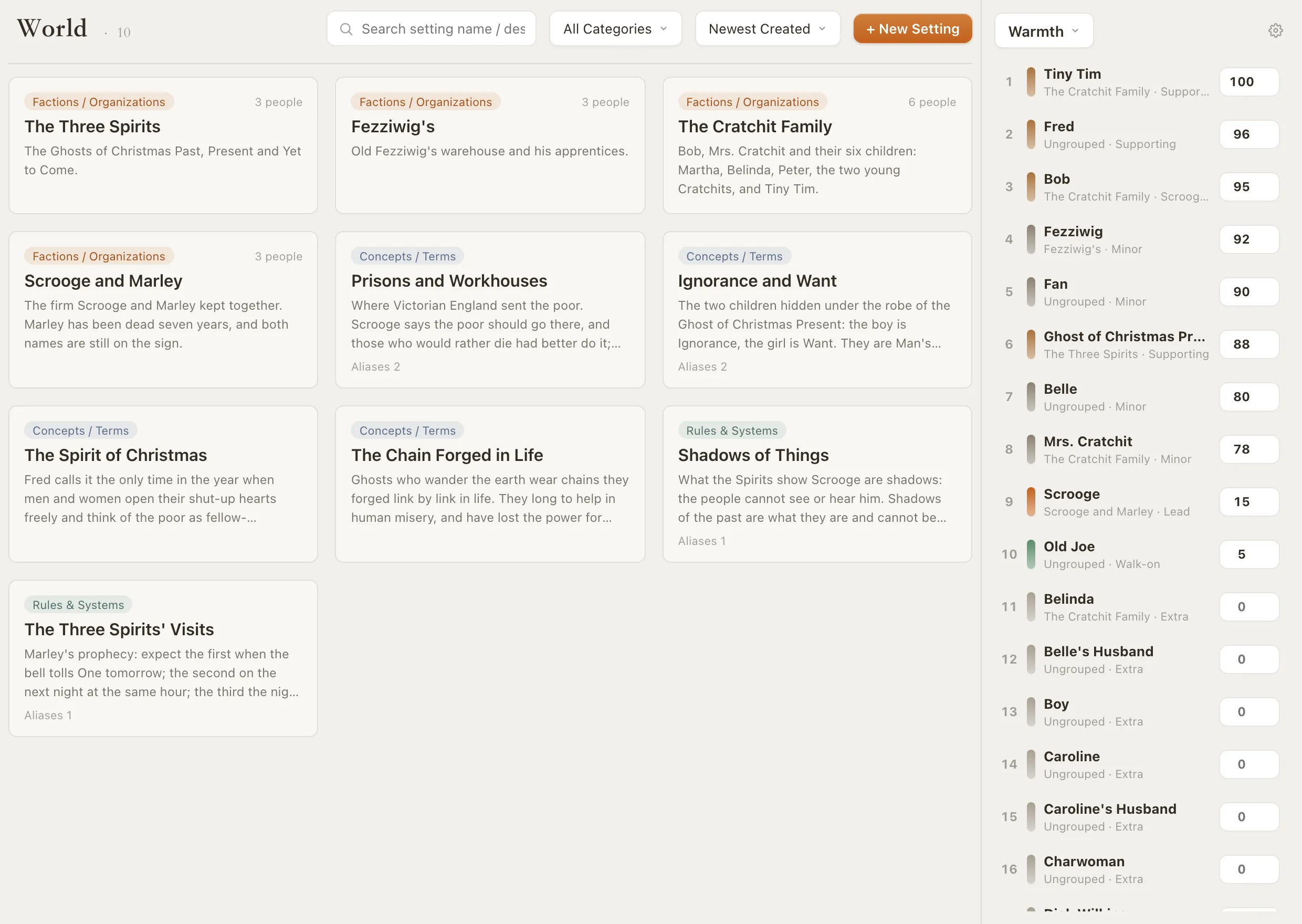
Loomworld world module: entries for the Three Spirits, the Spirit of Christmas and other world notes from A Christmas Carol

What a series bible saves you from

01

Book two contradicts book one

A character's eyes change colour, a dead man walks into a tavern, a city moves a day's ride closer. Each slip is small; readers who loved book one notice all of them.

02

Re-reading your own books

Without a bible, starting the next book means skimming the last three to remember who knows what. That is weeks of rereading instead of writing.

03

Nobody else can help

Editors, co-writers and audiobook narrators all need the same facts. A bible gives them one source instead of a string of questions.

What is in the template

Series overview and characters

Start with the logline, the series question and a table of books with the story time each one covers. Then one block per character: aliases, age at the start of each book, appearance details you will repeat, voice, secrets and who knows them, and status at the end of every book.

  • Book list with story time covered
  • Age per book, not just a birthday
  • Status at the end of each book

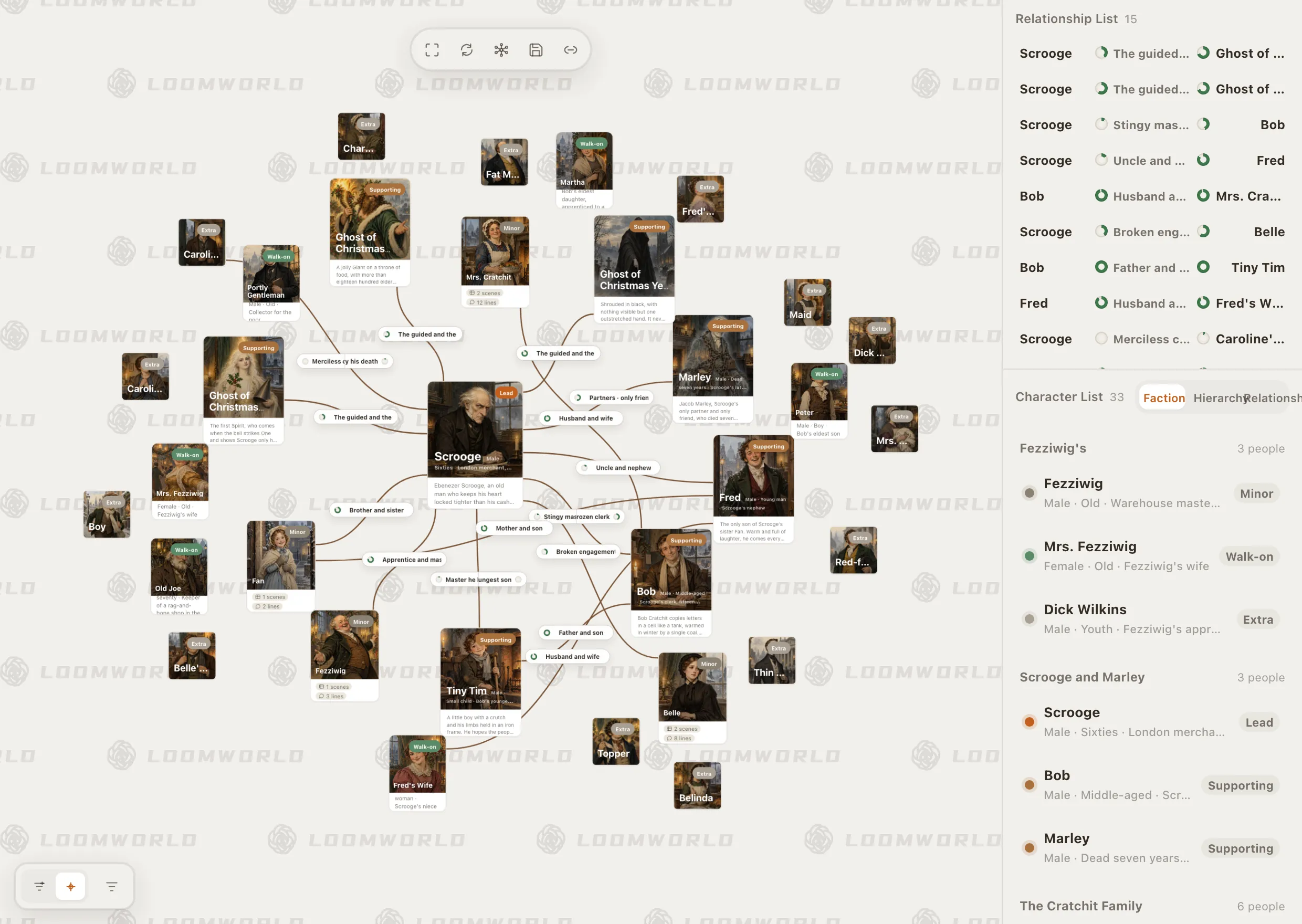
In Loomworld: characters link to their scenes

Loomworld character module: the relationship canvas for A Christmas Carol, with Scrooge at the centre, and the character list grouped by faction

Places, objects and world rules

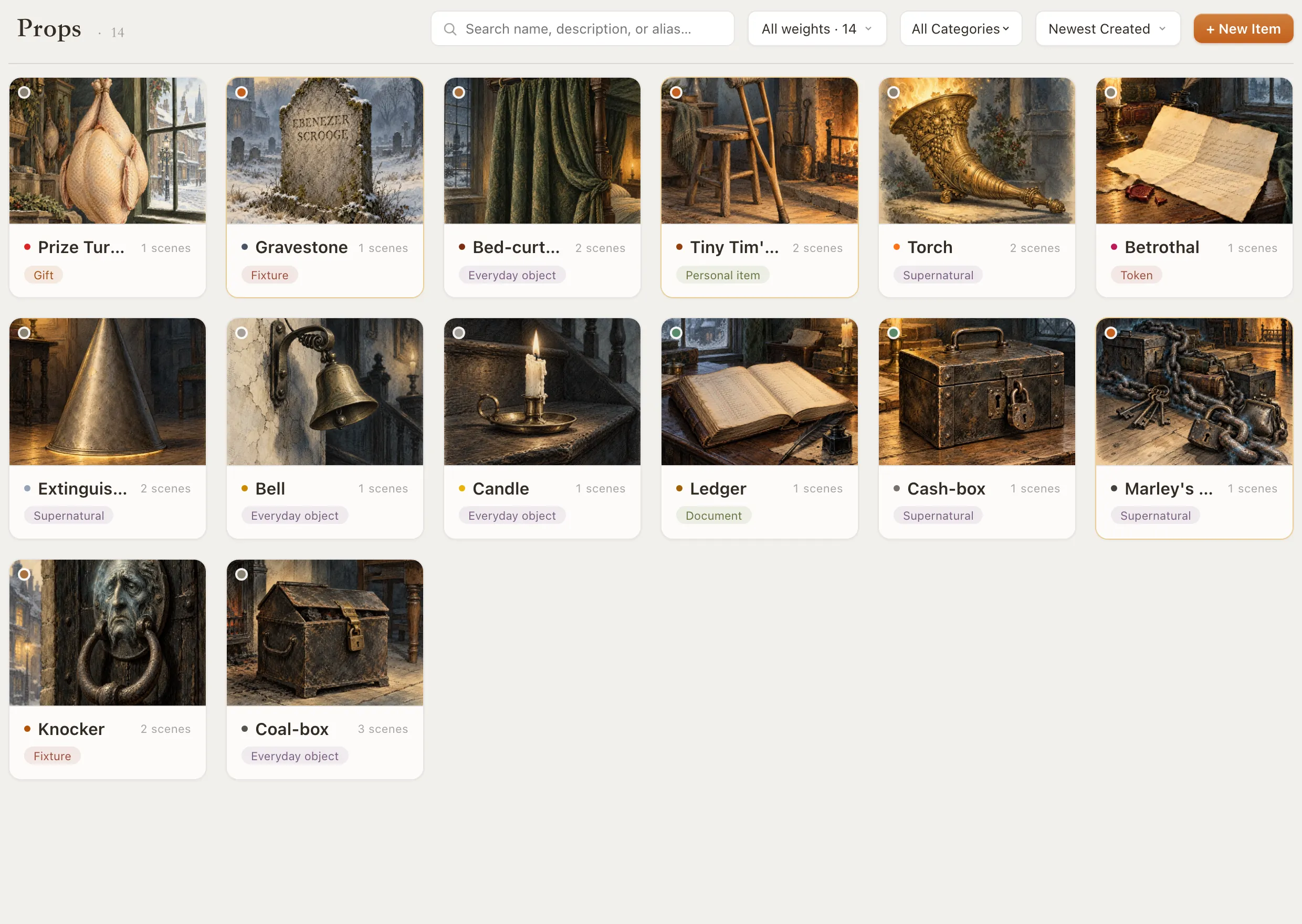
Places nest from country to building and record travel times, because distance is one of the easiest things to contradict. Objects record who has them and from when. World rules are written so you can check a scene against them, each with its cost or limit.

  • Place hierarchy and travel times
  • Object ownership over time
  • Rules with their costs and limits
Loomworld props module: cards for the knocker, the coal-box, Marley's chain and other objects from A Christmas Carol

Two timelines

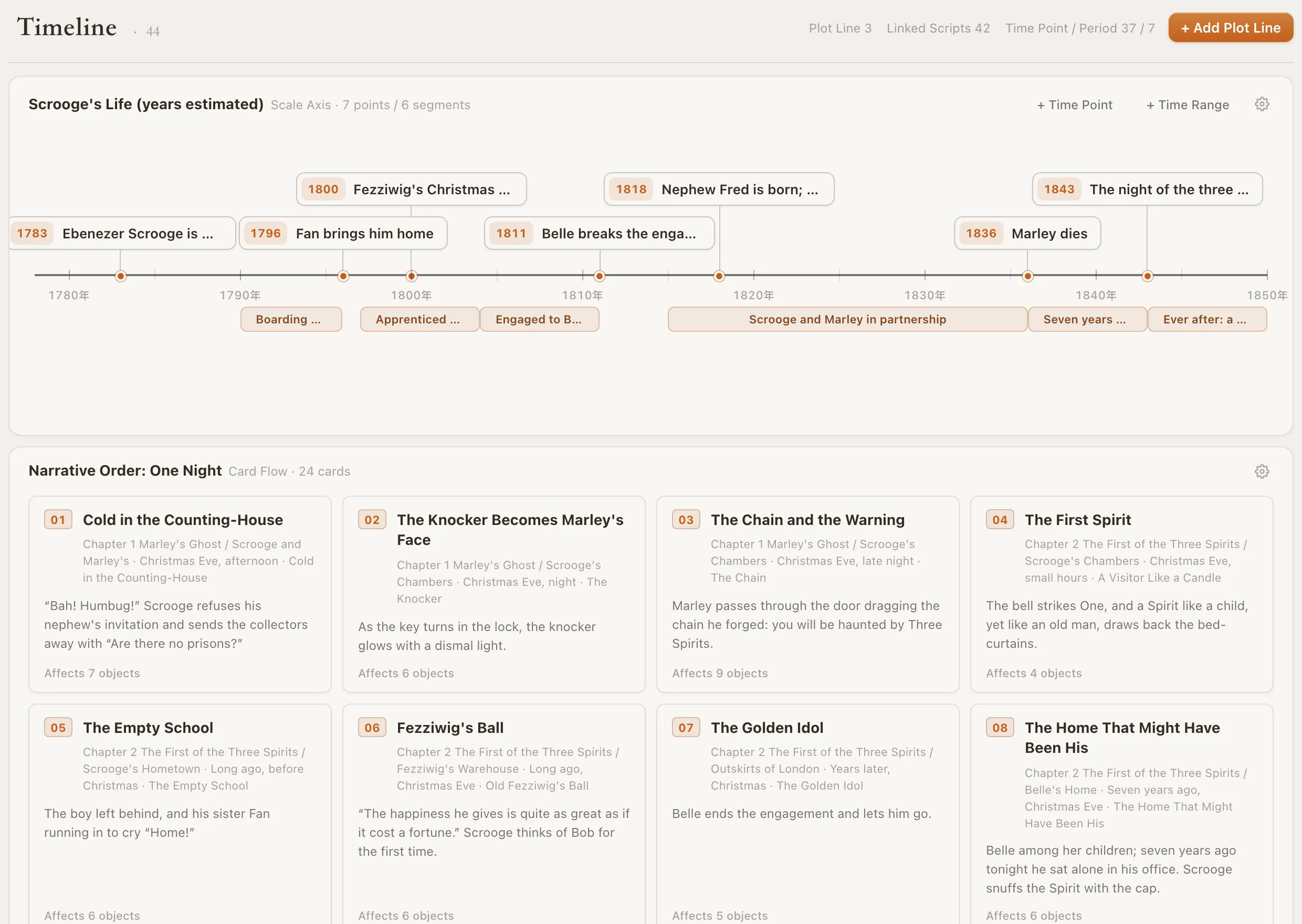
Story time and reading order are different clocks. The template keeps both: a chronological table of events, and per book the order the reader meets them, flagged as flashback or present.

In Loomworld: the timeline module

Loomworld timeline: Scrooge's life on a scale axis from 1783 to 1843, above the one-night narrative order as numbered scene cards

Open threads, continuity log and style sheet

Open threads track every setup with its reminders and payoff. The continuity log is the list of facts you will need to check again later, written down the moment you establish them. The style sheet fixes spellings, capitalisation and conventions for invented words.

In Loomworld: the foreshadowing tracker

  • Setup, reminders and payoff per thread
  • Facts to check again, and where
  • Spellings and conventions

How to use it

  1. 1

    Fill it from book one

    Go through the first book once and fill in only what is on the page. Don't plan book three in it yet.

  2. 2

    Update it per chapter

    Add to the bible when you finish a chapter, not when you finish the book. Five minutes per chapter beats a week at the end.

  3. 3

    Check before each book

    Before drafting the next book, read the status lines, open threads and continuity log. That is your real outline.

Template file, Notion or Loomworld?

All three work. The question is how much of the bible you want to keep up to date by hand.

CapabilityLoomworldThis templateNotion template
PriceFree planFreeFree to paid
Works in any editor, no account——
Linked to the manuscript——
Appearance counts per character and object—Manual
Timeline view with both clocksTwo tablesDate-based view
Overdue foreshadowing warnings——

Compared October 2026. Notion templates vary; most are databases you fill by hand.

Frequently asked questions

What is a series bible?

A series bible is the reference for a multi-book series: characters and how they change from book to book, places, objects, world rules, the timeline and open plot threads. It keeps later books consistent with earlier ones, and gives editors and co-writers one source of facts.

What is the difference between a series bible and a story bible?

A story bible covers one book. A series bible spans several, so it adds what changes between volumes: ages, deaths, who knows which secret by the end of each book, and threads that pay off books later.

When should I start a series bible?

While drafting book one, chapter by chapter. Reconstructing a bible from finished books takes far longer than writing it as you go.

Is the template really free?

Yes. Download it, change it and use it for your own books. No account or email needed.

Can I use it in Notion, Obsidian or Google Docs?

It is a Markdown file, so Notion and Obsidian open it directly with headings and tables intact. Any text editor can open it too.

Why would I use Loomworld instead?

Because a file only knows what you type into it. In Loomworld the bible is linked to the manuscript, so characters count their own appearances, the timeline links to chapters and the foreshadowing tracker warns you when a thread is overdue. The editor and bible are free.

Or let the bible keep itself

Start a Loomworld project for free. Every section of this template is a module there, linked to your manuscript.