The worst moment isn't running out of ideas. It's...

Loomworld — The AI writing desk for novels and screenplays

Visible structure

See it, and you get it

Built for novels and screenplays—done with messy setting docs. Time, places, characters, props and lore become card graphs you can edit anytime, so even a vast world stays clear.

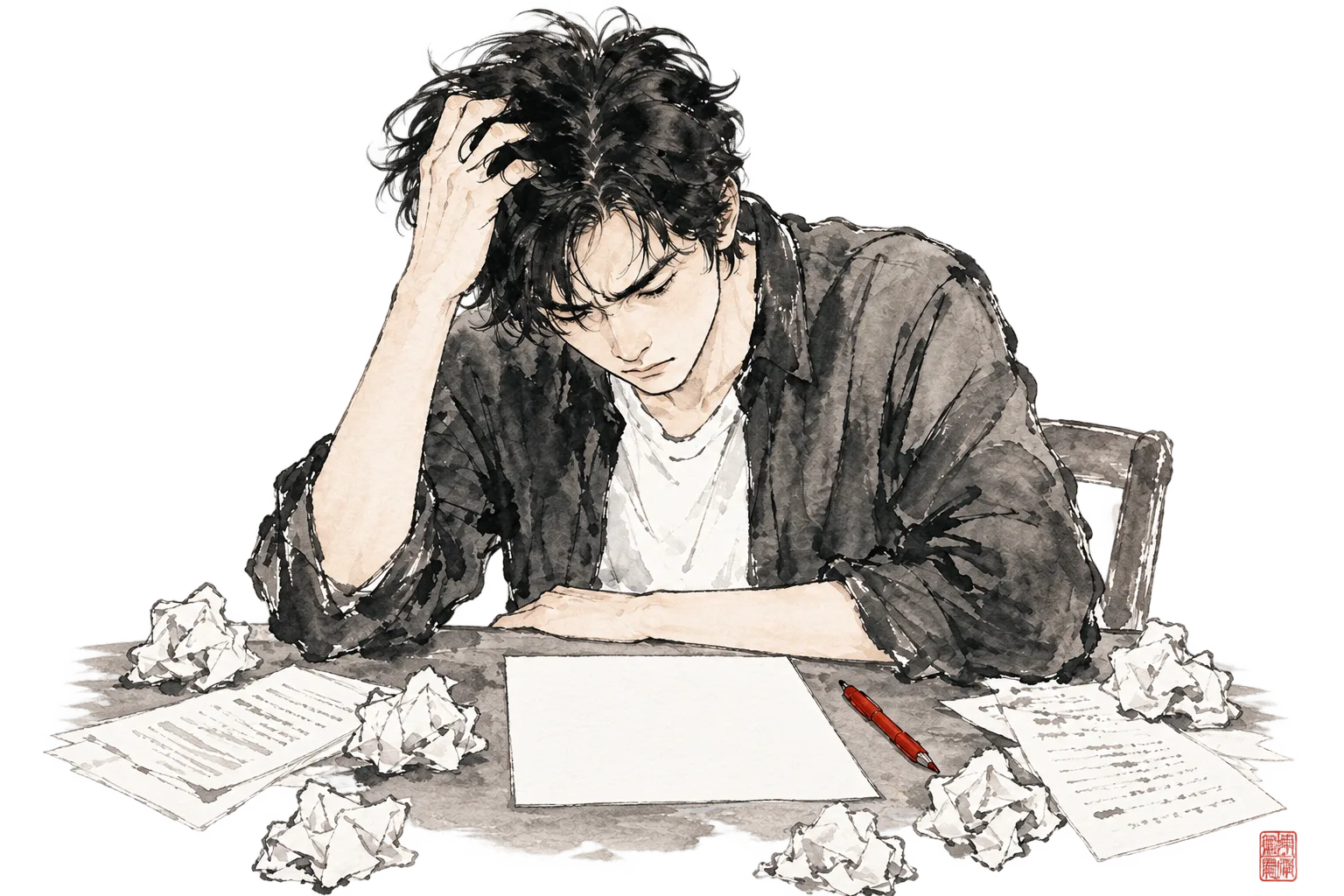
The worst moment isn't running out of ideas. It's...

Ink-and-wash illustration: a screenwriter slumped at a desk strewn with pages, crumpled paper balls and one cinnabar-red pen

Formatting at midnight—Still one cell off

Same character sheetpasted four times

Eight pages of history.Still can't find it

Act II aligns.Act III falls apart

Planted in episode one.Gone by episode nine

Where's theworld map?Still in my head.Can't draw it

Write a story long enough, and it scatters across the pages. What breaks isn't inspiration—
it's explaining the same thing four times—to the AI, and to yourself.

It's the tool's job, not your business.

Loomworld catches what shouldn't be draining you.

REALM

Six visual modules  to draw your story world

Relationship graph

01 — 06

Relationship graph

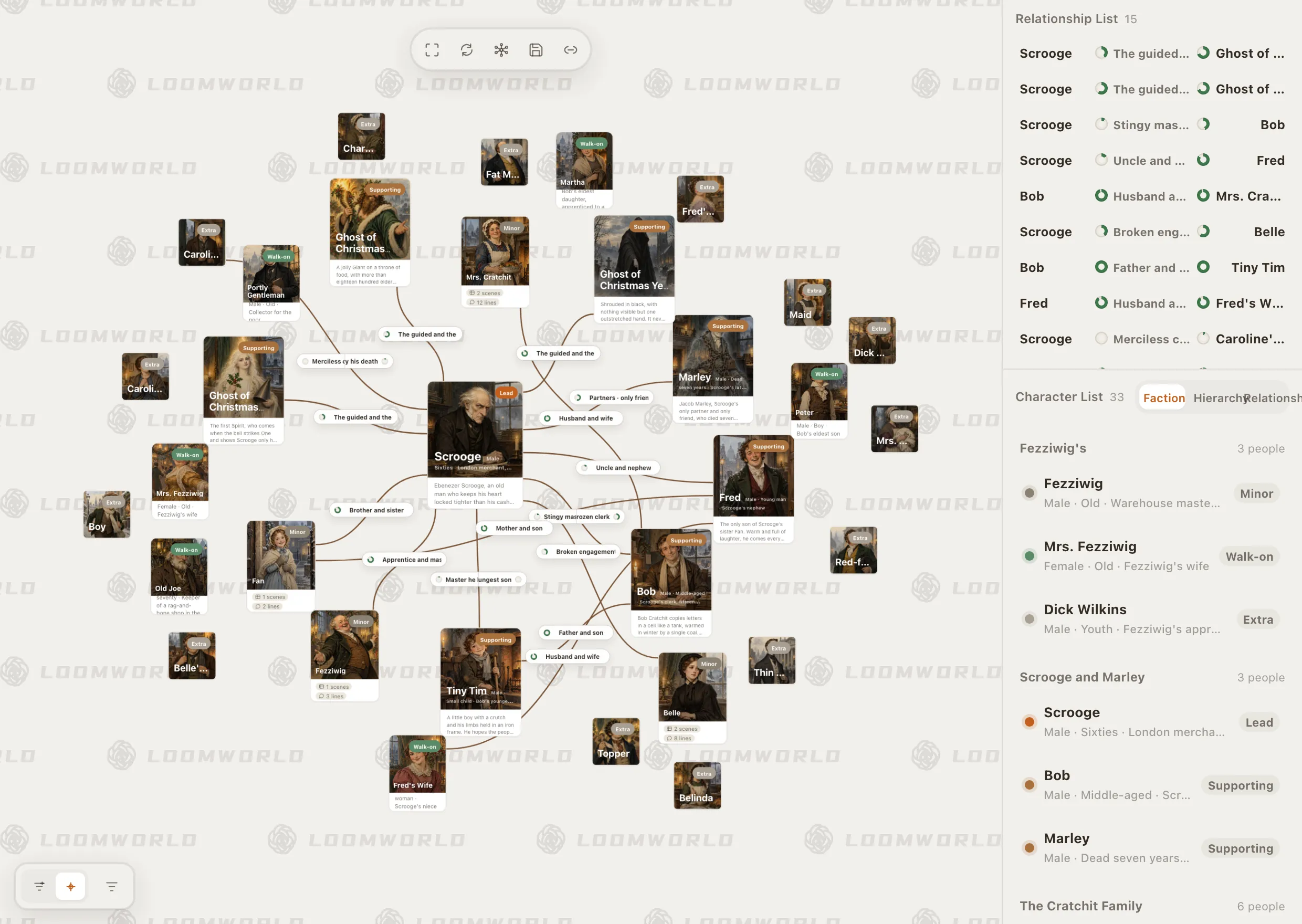
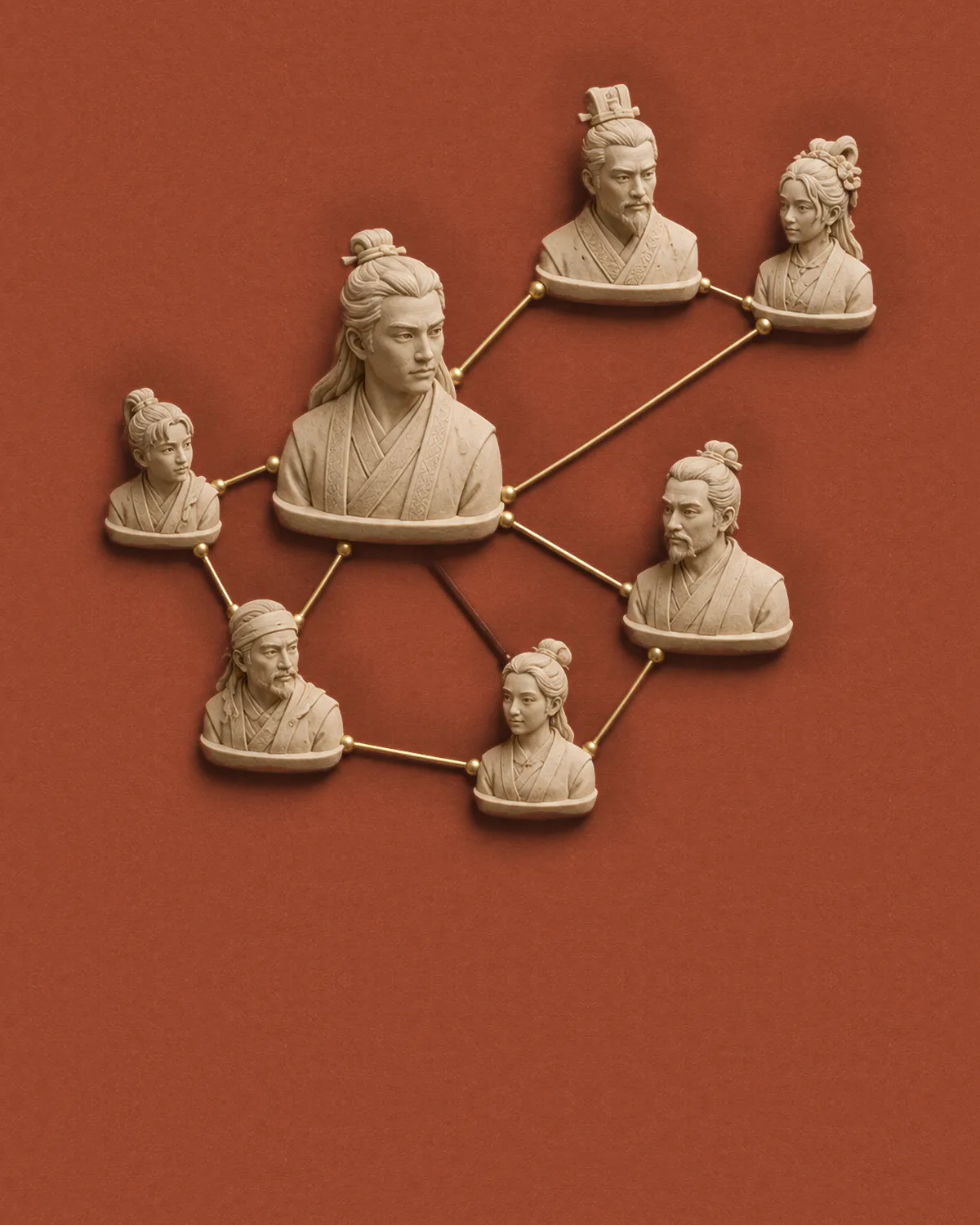
Characters aren't a roster. They're a net that keeps changing.

Characters connect through relationship lines, forming a full-picture graph you can read at a glance. Relationships are bidirectional and display intensity with ring indicators.Nodes layer by screen weight, keeping leads, supporting roles, and periphery figures sorted. Layouts save with one click.Alliances turn to betrayals, trust hardens into suspicion — each bond shifts across chapters. The system also surfaces undrawn connections from co-appearance records, so missed links don't hide until a final readthrough.

Mutual relations · Tier coloring · Dynamic evolution
2D/3D maps

02 — 06

2D/3D maps

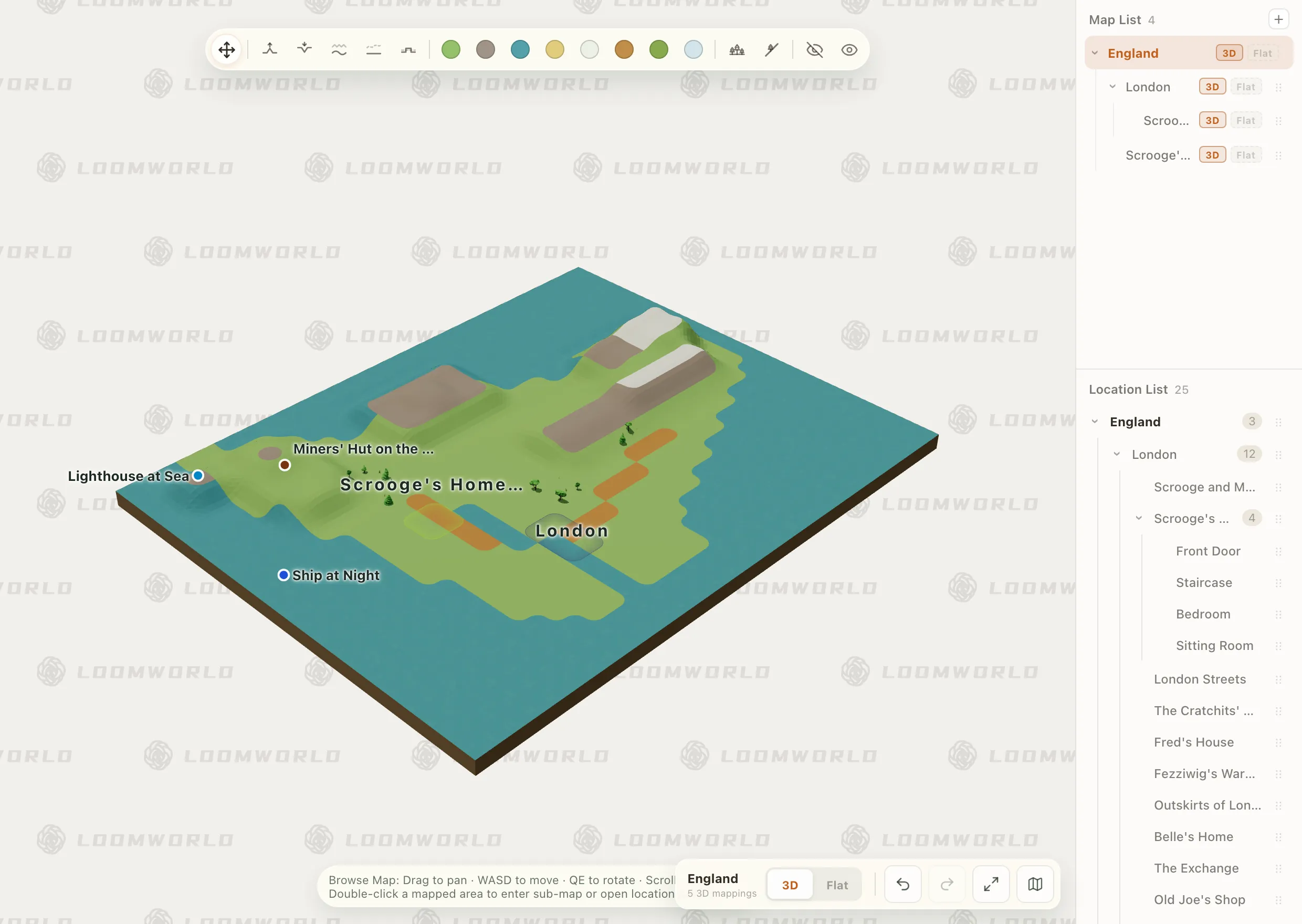
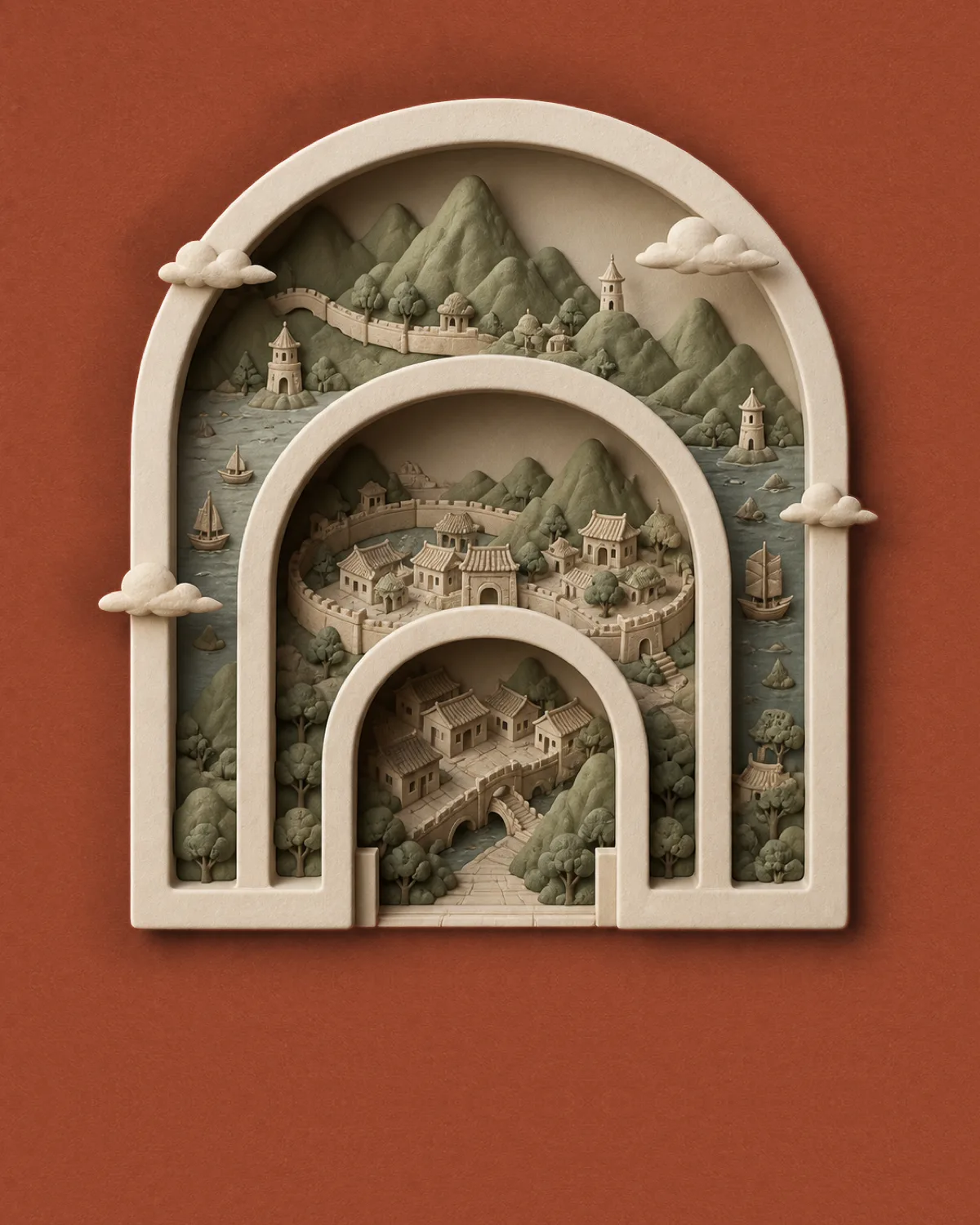
Both modes drawn freehand—bring the world in your head onto the page.

Maps switch freely between 2D and 3D. Territorial ownership is assignable — a city can belong to a specific kingdom or faction.The 2D mode accepts uploaded base maps or freehand drawing; regions are drawn with vector tools, so edges stay editable.The 3D mode works in pixel-grid units: sculpt terrain elevation, adjust surface textures, and place scene objects. Use 2D for macro faction layouts, 3D for scene reconstruction — geography stops living only in prose.

2D / 3D switching · Map / place / script decoupled
Visual timeline

03 — 06

Visual timeline

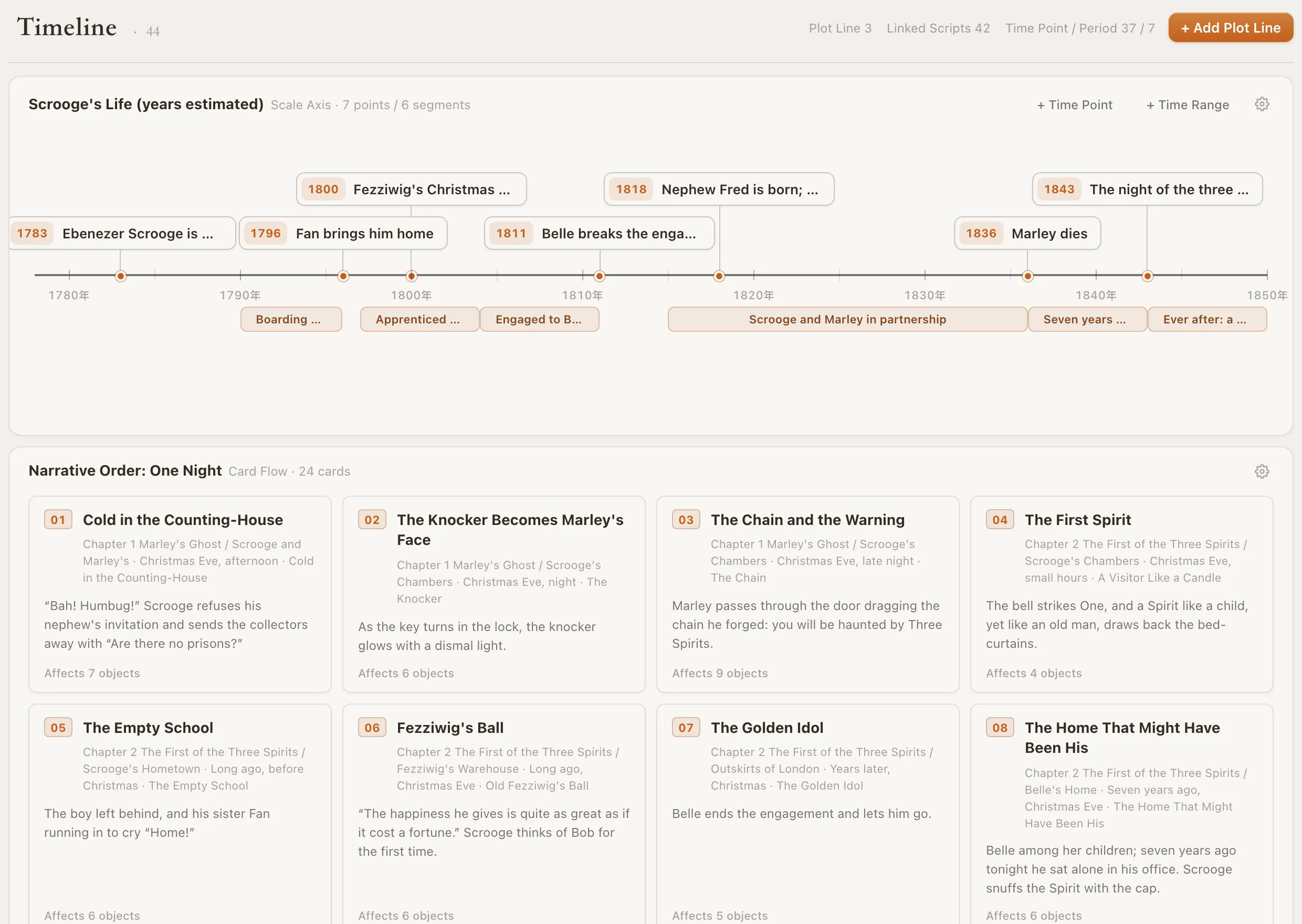
A timeline is not a checklist. It is the story's spine.

The timeline offers two views: a card-flow lane per character or thread, and a calibrated axis for checking whether intervals between events hold up.Events anchor live to script scenes — renumber a scene and the timeline updates automatically. One click jumps back to the exact page.Each event tags its involved characters, props, and locations, so opening any event shows its upstream causes and downstream effects. The result is a causal chain, not a disconnected checklist.

Dual modes · Four-level anchors back to script
Prop management

04 — 06

Prop management

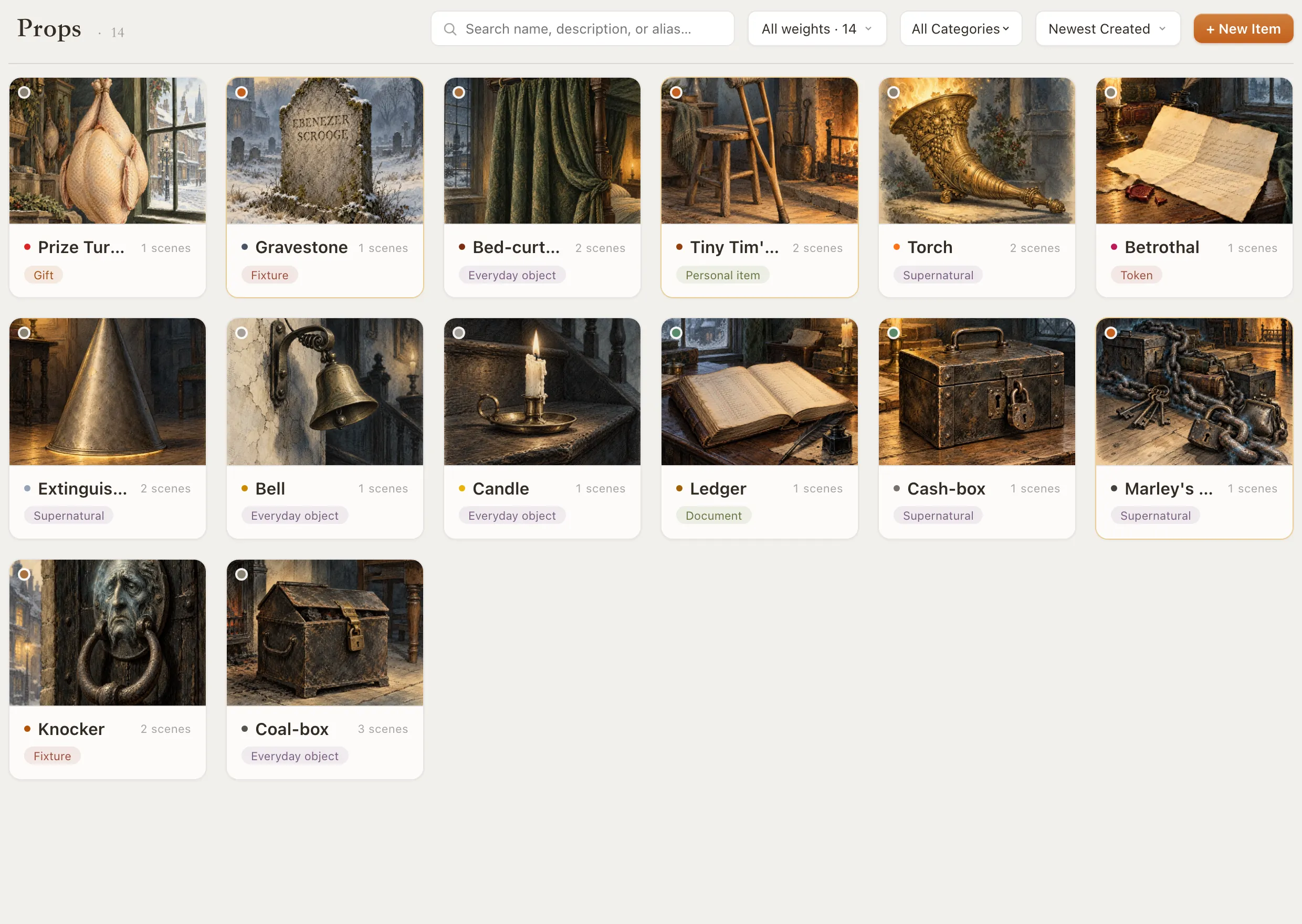
Props are not a loose list. They are weighted assets.

Props are color-coded by narrative weight — the props that drive the plot stand out from passing mentions at a glance.Each prop's detail page logs its current holder and a full chain of transfers: who forged it, who passed it on, and how.Every script appearance is recorded with location and count, and one click returns you to the exact line. When you forget where something last appeared midway through a draft, the transfer log answers before a full-text search does.

Multi-dimension tracking · Progressive rendering
World lore

05 — 06

World lore

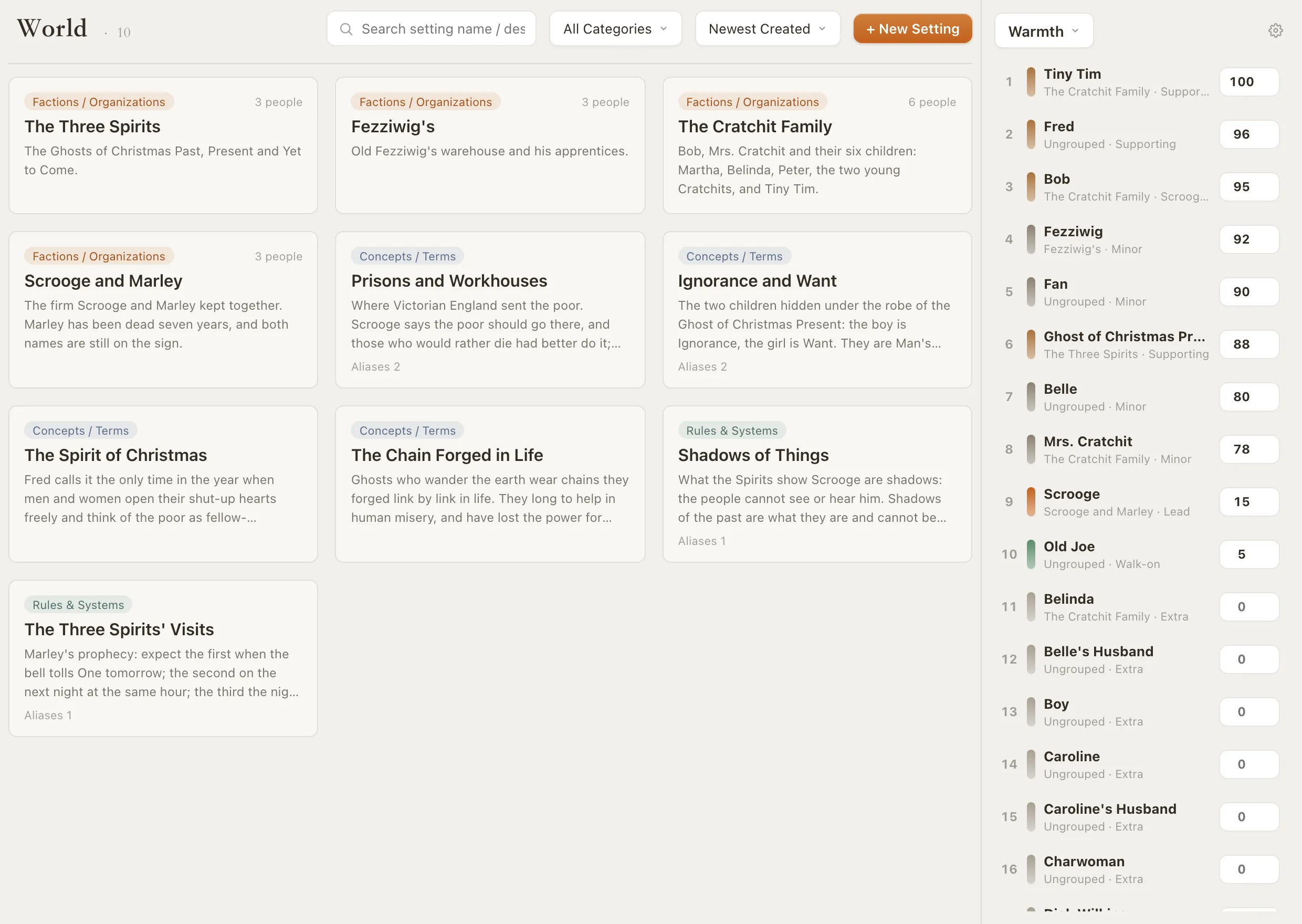
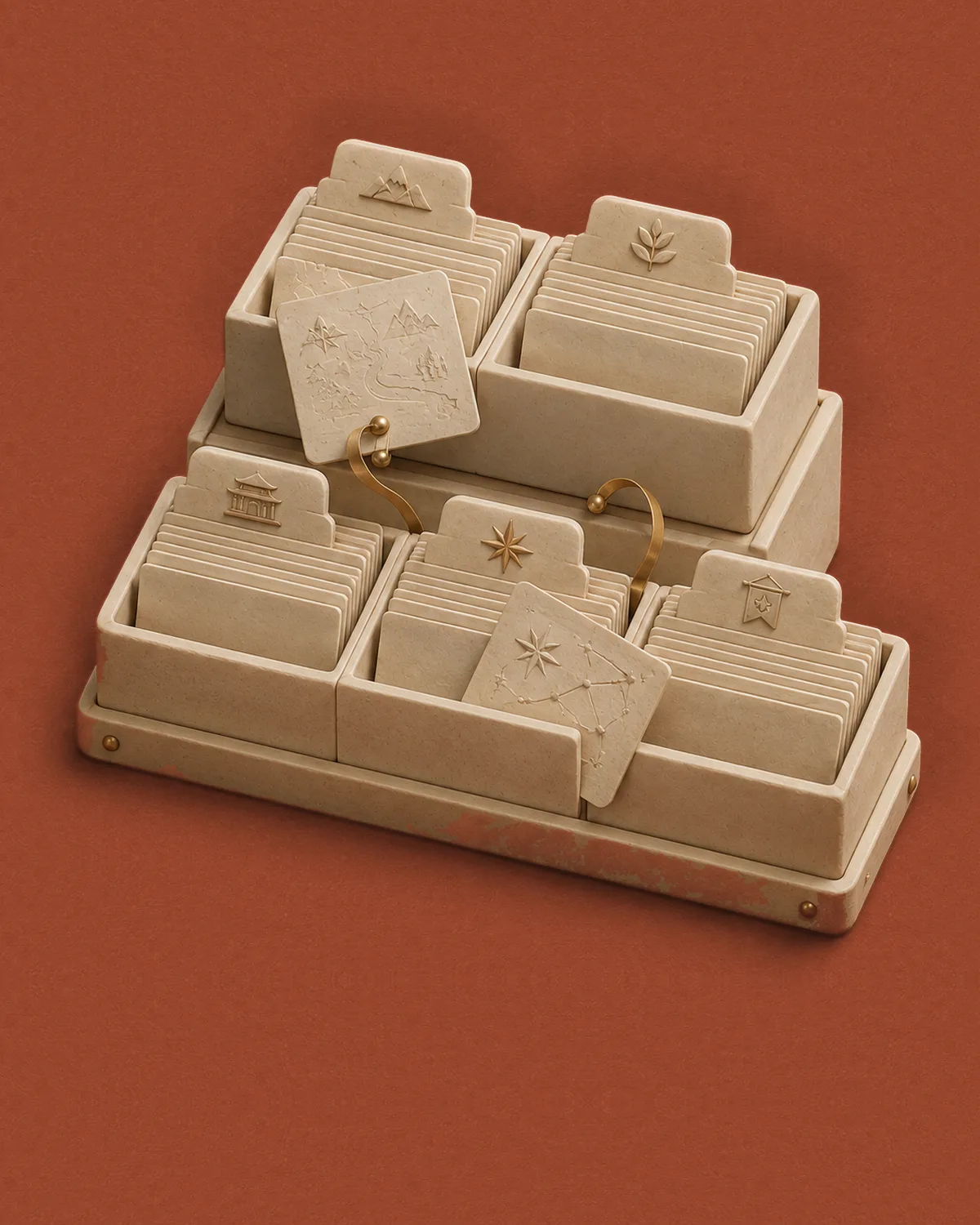
Lore no longer scatters—it's the thread that stitches the world together.

The worldbuilding library links to characters, props, locations, and the timeline. Change a character's faction and related entries update automatically.Faction groupings build themselves from character assignments — no manual sorting when you add someone new. Entries cross-reference through inline links, so opening any term shows every entry that cites it, forming a navigable, searchable knowledge web.A global ranking board lets you sort characters, props, and locations by custom dimensions — appearances, importance, or chapter spread.

Inline reference jumps · Cross-entity rankings
Foreshadow gantt

06 — 06

Foreshadow gantt

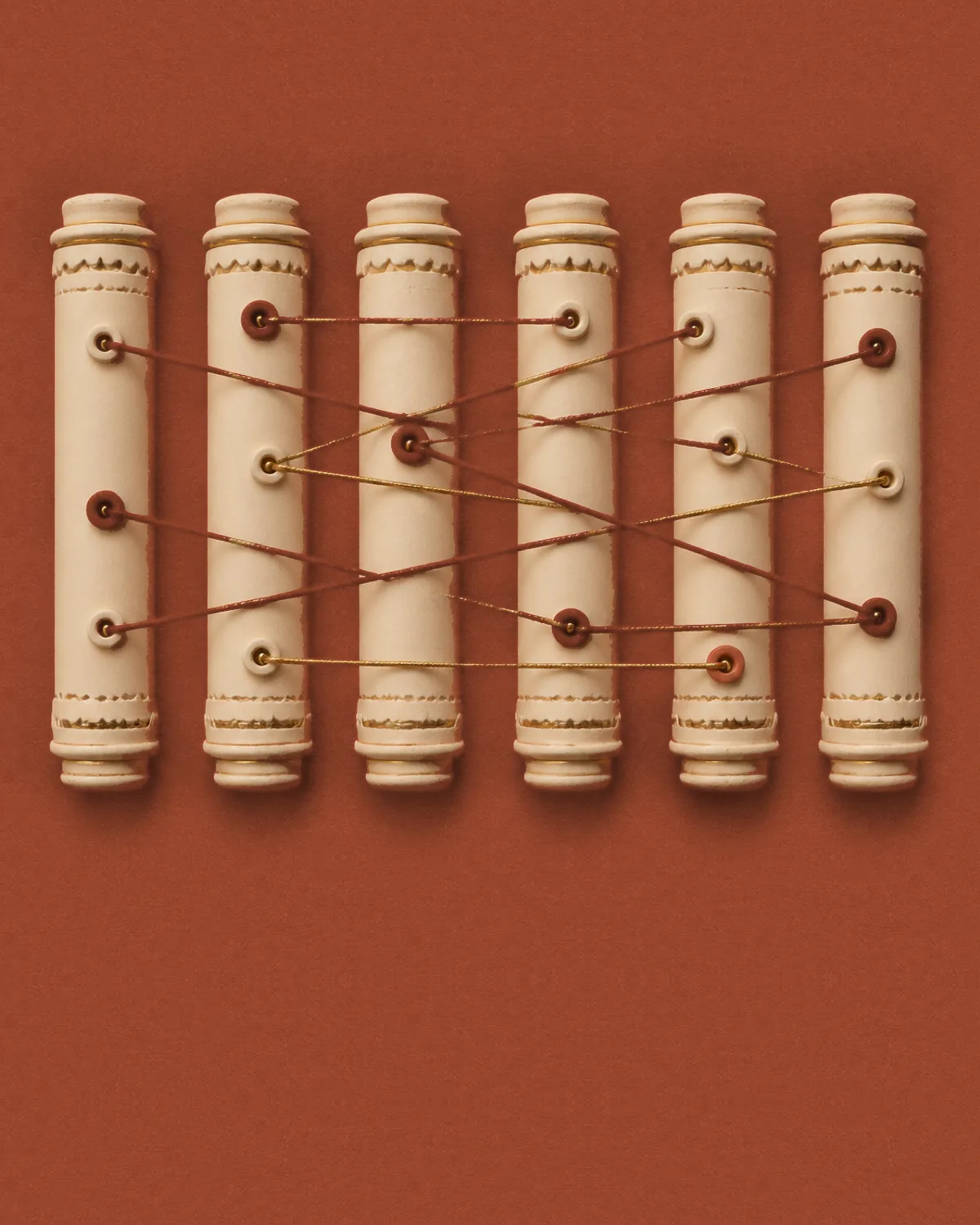
Stop keeping foreshadows in your head—the gantt shows what's buried and what never came back.

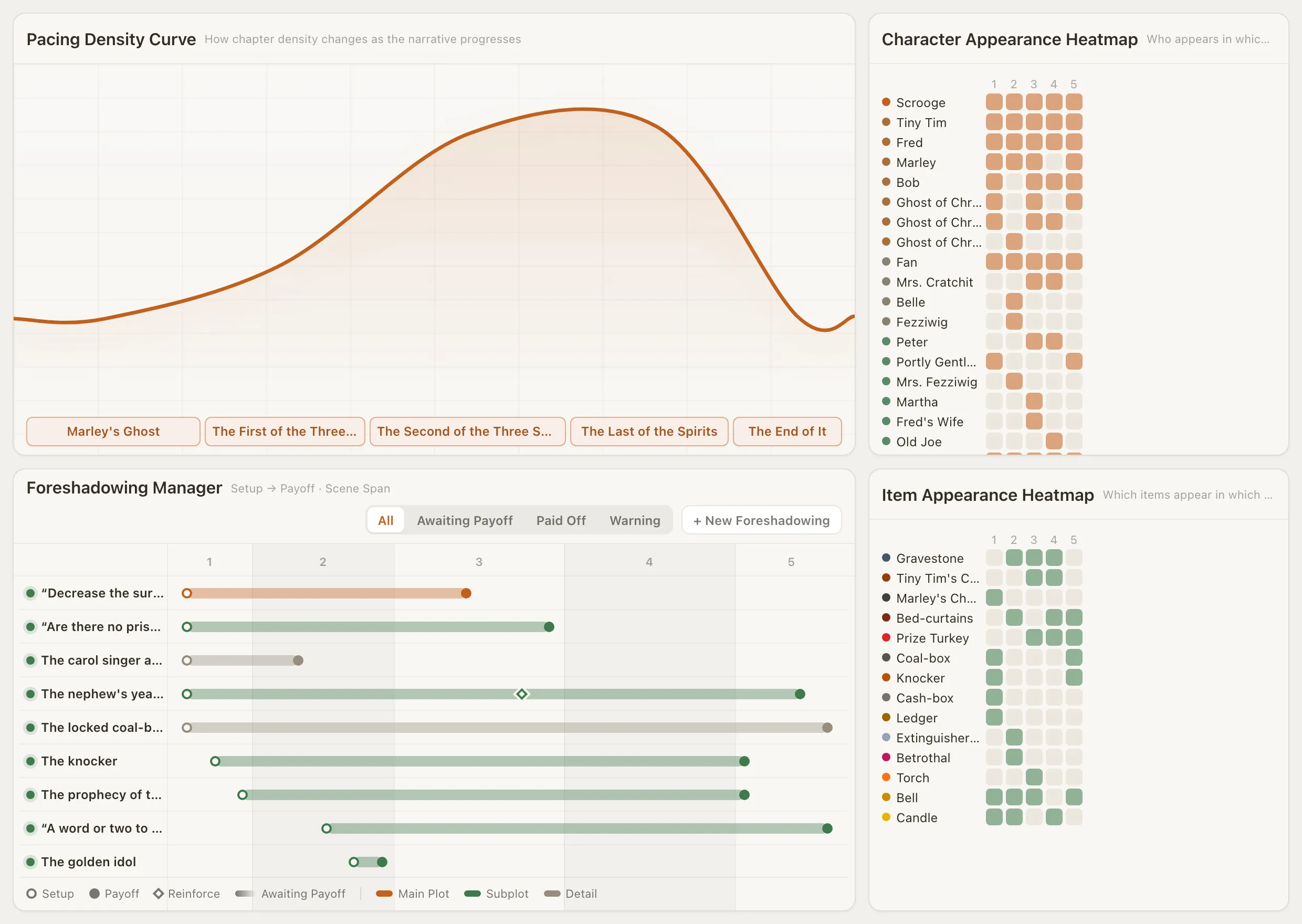
Foreshadowing threads no longer rely on memory. A Gantt chart maps every planted thread from setup to payoff — the remaining distance to resolution is readable at a glance.Chained threads link to each other, so following A to B to C is one click per step, not a chapter hunt.An automatic alert fires when a thread passes a set percentage of the book without closure, pushing it to the top of the list. The goal is to surface unresolved threads mid-draft, not at the final page.

Chained foreshadow jumping · Auto alert thresholds
GROW

Scripts only grow where flow never breaks

Nodes, links and AI collaboration all live inside the writing flow—no need to leave the editor. The moment you stop, the story goes half-cold. Loomworld keeps interruptions small, so the story follows the thought, still streaming.

壹

Keep hands on the keyboard.

Give any line one of nine node types and the style applies itself; a character line flows into dialogue on Enter, and after notes or transitions you're back to description. Type first, then shape the line—no forms, no placeholders.

Node shaping · TabSwitch with number keys
  • 1Title
  • 2Char.
  • 3Dialogue
  • 4Note
  • 5Act.
  • 6Transition
  • 7Voiceover
  • 8Caption
  • 9Scene

贰

Link the text.

Bind characters and props in brackets; places and lore auto-highlight. Timeline and foreshadow are a tap away. Aliases resolve to one thing.

Inline links · Stable references

Linked

Jane leaves the old watch at the café.

Hover · Click to previewProp

The watch father left

[alias:old watch]

RelationsPlacesTimelineForeshadow

叁

Idea to Final Draft

Select a passage to rewrite, expand, condense or polish; set chapter intent and scene beats in the companion, and let AI grow them into text—or talk it through, then preview and approve the write.

Selection editCompanionChat to proposal
Pre-preview
Scene 12 · CaféSelection

Jane stops in the doorway.

Her hand slips into her pocket.

RewriteExpandPolish
AI proposalGenerated

The watch speaks before she does.

View diffApprove

Six modules share one script dataset—change one place, six places grow with it.

WEAVE

Plenty of AI writes only one gets you

Everything in your script—characters, places, props, timelines, foreshadows—becomes a visible, editable, collaborative world.
When you need to ask, brainstorm or continue, there's no more pasting context or re-explaining lore—you speak, and it knows what you mean.

For Screenwriters & World-builders

Film & TV screenwriters
Short-drama creators
Novelists
Game narrative designers
Web-fiction authors
Animation writers
Murder-mystery writers
Worldbuilders
Film & TV screenwriters
Short-drama creators
Novelists
Game narrative designers
Web-fiction authors
Animation writers
Murder-mystery writers
Worldbuilders

A good tool shouldn't live on your memory. It should take root as you write.

General-purpose AI

Every chat starts with explaining the people, the world, what already happened; what you get is a loose paragraph to copy, tidy and check by hand—nothing goes straight into the work's own files.

Generate → tidy by hand → re-paste context

Loomworld

The more you write, the closer it gets to what you meant: characters, places, props and scenes settle into a local entity library. The AI loads the relevant material per task and reads details on demand.

Write → it settles → modules link → precise fetch

Plain text editors

Your own brain does all the remembering: character sheets, prop lists, timelines scattered across a dozen files. Change one thing, and you spend ages turning pages back.

Remember it all → scattered docs → manual sync

Write one name, and the world starts growing.

Page One

      Digging through lore, checking the timeline, holding foreshadows, it's not your business.
This time, let the tool remember you.